Centre for Research and Innovations
The Centre for Research and Innovations (CRI) is the organization’s knowledge and innovation hub. Through interdisciplinary research, data-driven tools, and expert consultancy, the Centre bridges science and practice to support governments, industries, and civil society in advancing sustainable and climate-smart solutions.

Centre’s Philosophy

Community and youth
capacity-building

Development of open-source
climate tools

Demonstration projects for climate resilience and sustainability
About the Program
The Centre for Research and Innovations (CRI) is the knowledge and innovation hub of the organization. It undertakes interdisciplinary research, develops data-driven tools, and provides specialized consultancy services that translate science into sustainable action. Acting as both a knowledge powerhouse and a business development arm, the CRI bridges the gap between research, technology, and practice. Through its evidence-based solutions, capacity-building programs, and decision-support systems, the Centre helps governments, industries, and civil society organizations design and implement effective sustainability and climate strategies.
What We Do

A. Research and Knowledge Development
- Conducting applied research on climate change, energy transitions, environmental management, and rural livelihoods.
- Developing data-driven frameworks and decision-support systems to guide planning and policy at the state and district levels.
- Producing policy briefs, working papers, and scientific publications that translate evidence into actionable insights.
- Promoting open data and innovation through collaboration with universities, think tanks, and global research platforms

B. Consultancy, Products, and Services
The Centre for Research and Innovations (CRI) functions as the knowledge and consulting arm of the organization, delivering science-based, data-driven, and policy-relevant solutions to governments, industries, and development partners.
Our consultancy vertical transforms interdisciplinary research into actionable outcomes — helping clients achieve measurable progress toward sustainability, climate resilience, and netzero transitions.
1. Climate Change, Risk, and Adaptation Services
- Climate vulnerability, hazard, and exposure mapping (state, district, and community scale).
- Climate Risk Assessment (CRA) and Integrated Climate Resilience Frameworks.
- Preparation of Climate Action and Adaptation Plans for states, cities, and sectors.
- Ecosystem-based Adaptation (EbA) and Nature-based Solutions (NbS) design.
- Sectoral adaptation planning – agriculture, water, forestry, health, and infrastructure.
- Heatwave, drought, and flood management strategies and early warning systems.
- Mainstreaming climate resilience in development programs and policies.
- Development of Climate Information Services and Decision-Support Tools
2. GHG Accounting, Carbon Management, and Net-Zero Advisory
- Corporate, institutional, and city-level GHG inventories (Scope 1–3).
- Development of Net-Zero Roadmaps aligned with SBTi, NDCs, and SDG 13.
- Carbon offset project design under voluntary and compliance markets (Verra, Gold Standard).
- Carbon Credit Generation, Verification, and Trading Advisory.
- Carbon pricing, internal carbon budgets, and marginal abatement cost curves.
- Carbon Neutrality Certification Support for organizations and events.
- Life Cycle GHG emission tracking and hotspot identification.
3. Life Cycle Assessment (LCA) and Environmental Foot printing
- Product, process, and organizational LCAs following ISO 14040/44.
- Cradle-to-grave and cradle-to-cradle assessments.
- Carbon, water, and ecological foot printing.
- Social LCA and Life Cycle Costing (LCC).
- Comparative LCA for clean technology adoption.
- Environmental Product Declarations (EPD) and Eco-label support.
4. ESG and Corporate Sustainability Services
- Sustainability Strategy Development and target setting.
- Sustainability and ESG Reporting aligned with GRI, SASB, TCFD, <IR>, BRSR, and CDP.
- ESG due diligence, risk assessment, and disclosure enhancement.
- Materiality assessment and stakeholder engagement.
- Corporate Sustainability Audits (ISO 14001, ISO 45001, ISO 50001).
- CSR strategy design, impact assessment, and third-party evaluation.
- Circular economy and resource efficiency strategy development.
5. Environmental Planning, Assessment, and Compliance
- Environmental and Social Impact Assessments (EIA/SIA) & EMPs.
- Rapid Environmental Assessments and Post-EIA Audits.
- Environmental Clearance documentation and compliance monitoring.
- Pollution load assessments and mitigation planning.
- Environmental Auditing and ISO 14001/EMS implementation.
- Industrial and mining environment management and rehabilitation plans.
- Cumulative Impact Assessment for industrial corridors and infrastructure projects
6. Air, Water, Soil, and Waste Management Services
- Ambient and source emission monitoring; stack and fugitive emission analysis.
- Air Quality Modelling & Source Apportionment Studies.
- Water and wastewater treatment system design and audit.
- Solid, biomedical, plastic, and e-waste management planning.
- Industrial symbiosis and circular waste valorization studies.
- Soil quality assessment and remediation planning.
- Resource recovery and zero-liquid-discharge strategy formulation.
7. Energy, Decarbonization, and Clean Technology
- Renewable energy feasibility (solar, wind, biomass, small hydro).
- Industrial and building energy audits and efficiency retrofits.
- Green building certification (IGBC, GRIHA, LEED) support.
- Hydrogen economy and clean fuel transition studies.
- Energy transition policy modelling and scenario analysis.
- Clean technology benchmarking and cost-benefit analysis.
- Low-carbon industrial cluster planning.
8. Climate Finance, Economics, and Policy Advisory
- Climate Finance Readiness Assessments for institutions and governments.
- Green/climate fund proposal development (GCF, Adaptation Fund, NAFCC, etc.).
- Economic Valuation of Ecosystem Services and environmental externalities.
- Cost–Benefit Analysis (CBA) and Cost-Effectiveness Analysis (CEA).
- Development of green bond frameworks and impact reporting.
- Financial modelling for climate projects and RBF mechanisms.
- MRV (Measurement, Reporting, Verification) frameworks for climate finance.
- Climate policy analysis, design, and institutional capacity support.
9. Remote Sensing, GIS, and Earth Observation Services
- Satellite-based Land Use/Land Cover Mapping and temporal change detection.
- Deforestation, urban sprawl, and mining footprint mapping.
- Satellite-based Air Quality and Emission Monitoring (Sentinel-5P, MODIS).
- Agriculture and drought monitoring using NDVI, EVI, and yield estimation models.
- Water resource and watershed mapping; groundwater potential zoning.
- Hazard and disaster risk mapping and early warning dashboards.
- Urban heat island analysis and climate-resilient city planning.
- Web-GIS dashboards, story maps, and decision-support systems.
10. Sustainable Agriculture and Rural Development
- Climate-smart and regenerative agriculture planning.
- Agri-value chain analysis and market linkage strategy.
- Natural resource management and watershed development.
- Livelihood diversification and skill development planning.
- Socio-economic impact assessment of agriculture interventions.
- Carbon farming and soil organic carbon monitoring systems.
11. Public Health, Environment, and Social Well-being Studies
- Environmental health and epidemiological studies (air, water, heat stress).
- Climate–health linkage assessments and vulnerability mapping.
- Nutrition, sanitation, and environmental hygiene research.
- Social inclusion and gender analysis in environmental programs.
- Health impact assessments (HIA) of projects and policies.
12. Knowledge Management, Training, and Capacity Building
- Thematic training on climate data analytics, ESG, and sustainability.
- Short-term certificate programs for professionals and students.
- Policy dialogues, webinars, and technical workshops.
- Development of IEC and outreach materials.
- Knowledge portals, e-learning platforms, and data repositories.
13. Project Formulation, DPRs, and Implementation Support
- Detailed Project Reports (DPRs) for the environment, climate, and livelihood sectors.
- Feasibility and concept notes for funding proposals.
- Project management, implementation, and technical backstopping.
- Monitoring, evaluation, and impact assessment (M&E/Impact frameworks).
- Third-party audits and performance reviews.
- Development of performance indicators and sustainability scorecards.
14. Digital Tools, Models, and Decision Support Systems
- Climate and Emission Dashboards integrating satellite and ground data.
- Predictive models for climate risk, pollution, and land degradation.
- Web-based data visualization and MRV systems for governments.
- AI/ML-based analytics for emission forecasting and resource management.
- Mobile apps for field data collection, citizen science, and awareness.
15. Communication, Outreach, and Advocacy
- Science communication for climate action and sustainable development.
- Public awareness campaign design and execution.
- Preparation of policy briefs, case studies, and thematic publications.
- Documentary and visual storytelling on environmental change.
Work with Us
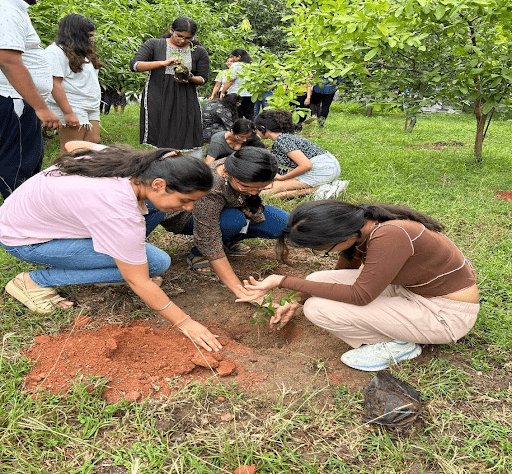
Join Sustainable Bharat Foundation and take action for a greener planet. Participate in tree plantations, clean-up drives, and awareness programs. Together, we can protect nature, inspire change, and build a sustainable, resilient Bharat.