During the winter season, Ranchi occasionally experiences elevated Air Quality Index (AQI) levels, a pattern that differs from the chronic pollution challenges seen in many large and industrialized Indian cities. Given Ranchi’s relatively lower emission intensity, these seasonal variations highlight the importance of understanding local atmospheric conditions alongside emission sources. Such context-specific interpretation is central to effective urban air quality management under India’s National Clean Air Programme (NCAP), which emphasizes tailored, evidence-based interventions.
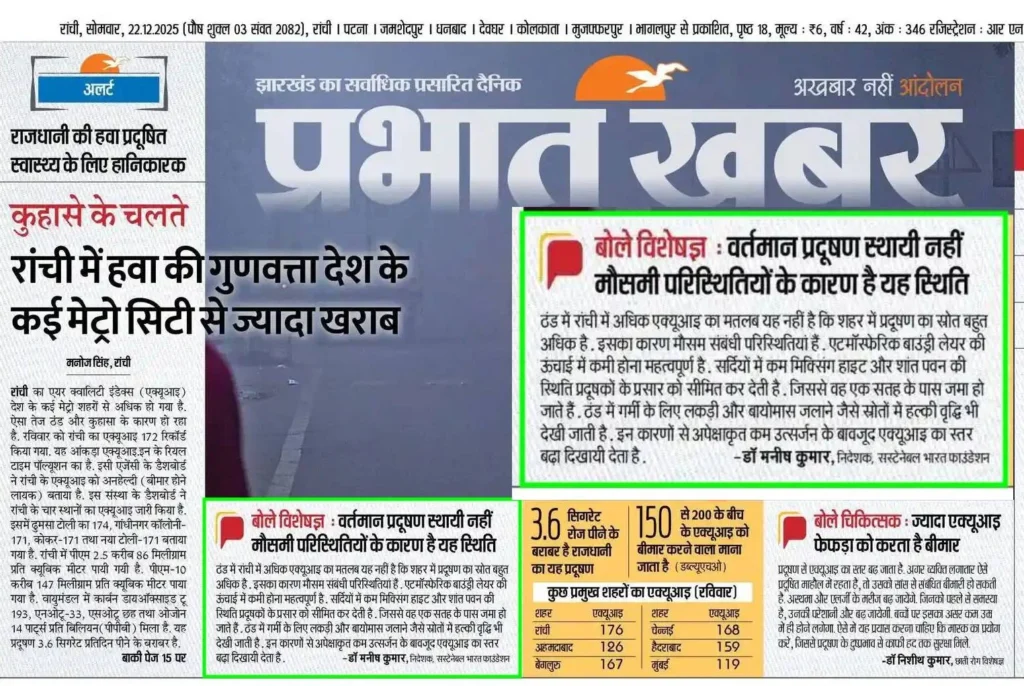
In this context, Prabhat Khabar, a leading Hindi daily, recently cited Dr. Manish Kumar, Executive Director of our organization, in its coverage of prevailing air quality conditions in Ranchi. Dr. Kumar offered a scientific perspective on the winter-time AQI trends, noting that short-term increases in AQI should not be interpreted solely as a reflection of high pollution emissions.
He explained that winter meteorological factors—particularly the seasonal lowering of the atmospheric boundary layer, reduced mixing heights, and limited wind-driven dispersion—play a significant role in the temporary accumulation of pollutants near ground level. Under such conditions, even moderate emission levels can result in elevated AQI values. He also observed that a modest rise in winter-specific local sources, such as biomass and wood burning for heating purposes, can further influence air quality during these periods.
These observations align closely with the objectives of NCAP and state air action plans, which recognize the need to integrate meteorological assessment, seasonal variability, and localized source management into clean air strategies. For cities like Ranchi, this underscores the importance of season-sensitive planning measures—such as winter-specific advisories, improved air quality forecasting, and targeted management of biomass burning—to complement long-term emission reduction efforts.
The media citation reflects our organization’s continued engagement in NCAP-aligned, science-driven air quality discourse. Through research, policy support, and public communication, we remain committed to contributing to informed and constructive approaches for improving air quality and safeguarding public health in Jharkhand and beyond.